Perception
The cards introduce images, archetypes, relationships, and tensions that give the question a visible symbolic structure.
Symbols, projection, and conscious reflection
Tarot doesn’t remove uncertainty. It gives uncertainty a symbolic language so the patterns beneath a question can be examined more clearly.
Tarot Through Synchronic Self Theory
In Synchronic Self Theory, tarot works as a structured conversation between the questioner, the reader, the cards drawn, and the patterns already active in the questioner’s life.
The cards aren’t treated as fixed commands handed down by an external authority. Their imagery creates a symbolic field in which projections, fears, desires, assumptions, conflicts, and unrealized choices can become visible.
A reading begins with perception. A card creates recognition through image, archetype, position, or emotional response. The meaning that emerges is then tested against the question, the surrounding cards, and the lived reality of the person receiving the reading.
The goal isn’t obedience to the cards. It’s reintegration: taking what the reading reveals and deciding how that insight should influence thought, behavior, planning, boundaries, or conscious action.
Tarot doesn’t do your thinking for you. It shows you where your thinking may already be trapped.
The Reflective Process
Each reading is interpreted through perception, projection, recognition, and reintegration.
The cards introduce images, archetypes, relationships, and tensions that give the question a visible symbolic structure.
The questioner and reader notice what emotions, assumptions, memories, or interpretations are being projected onto the cards.
The spread reveals a pattern that may connect the question to motives, choices, conflicts, or possibilities that weren’t previously obvious.
The reading becomes useful when the insight is translated into a decision, boundary, experiment, conversation, or new way of approaching the situation.
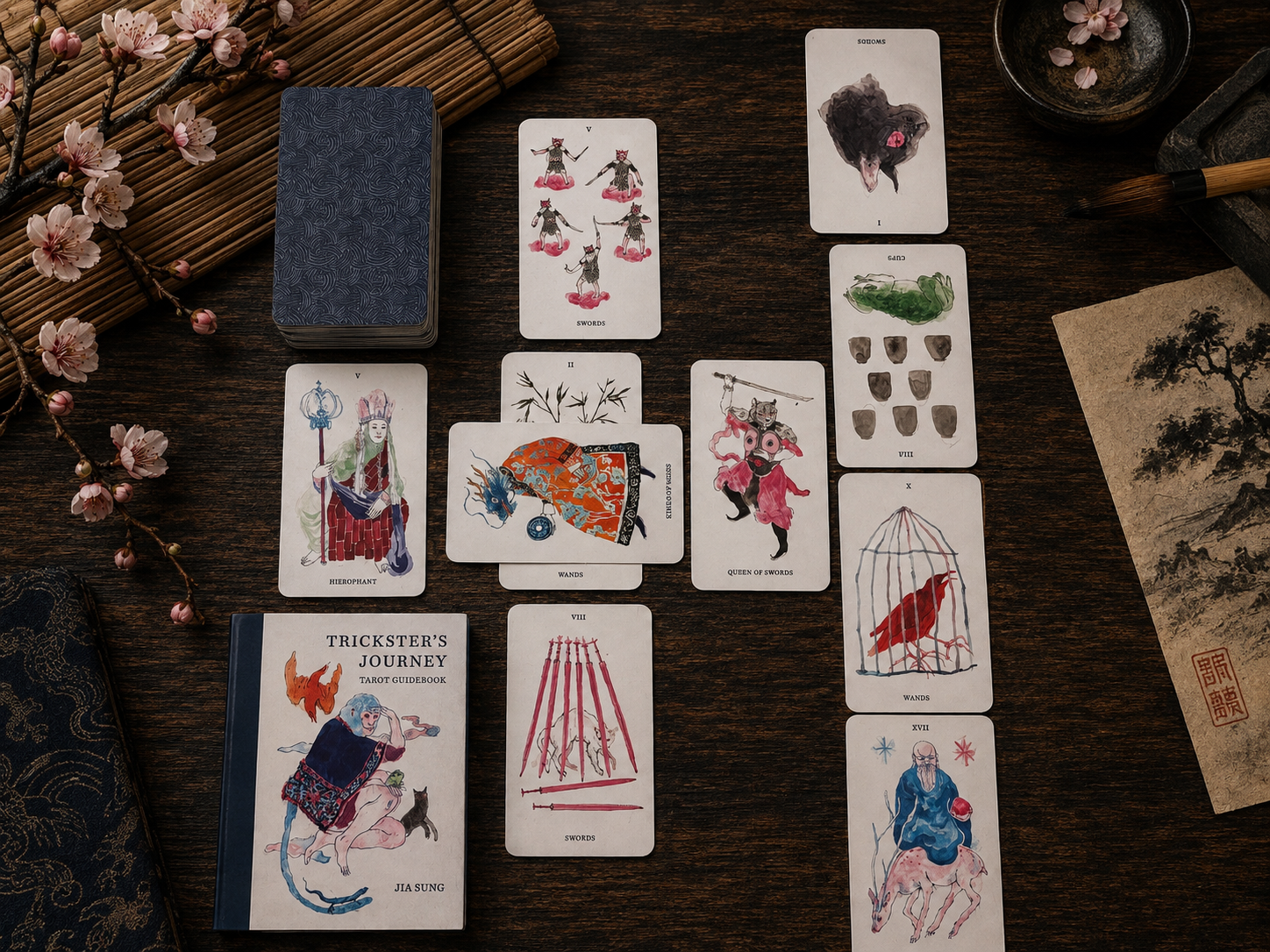
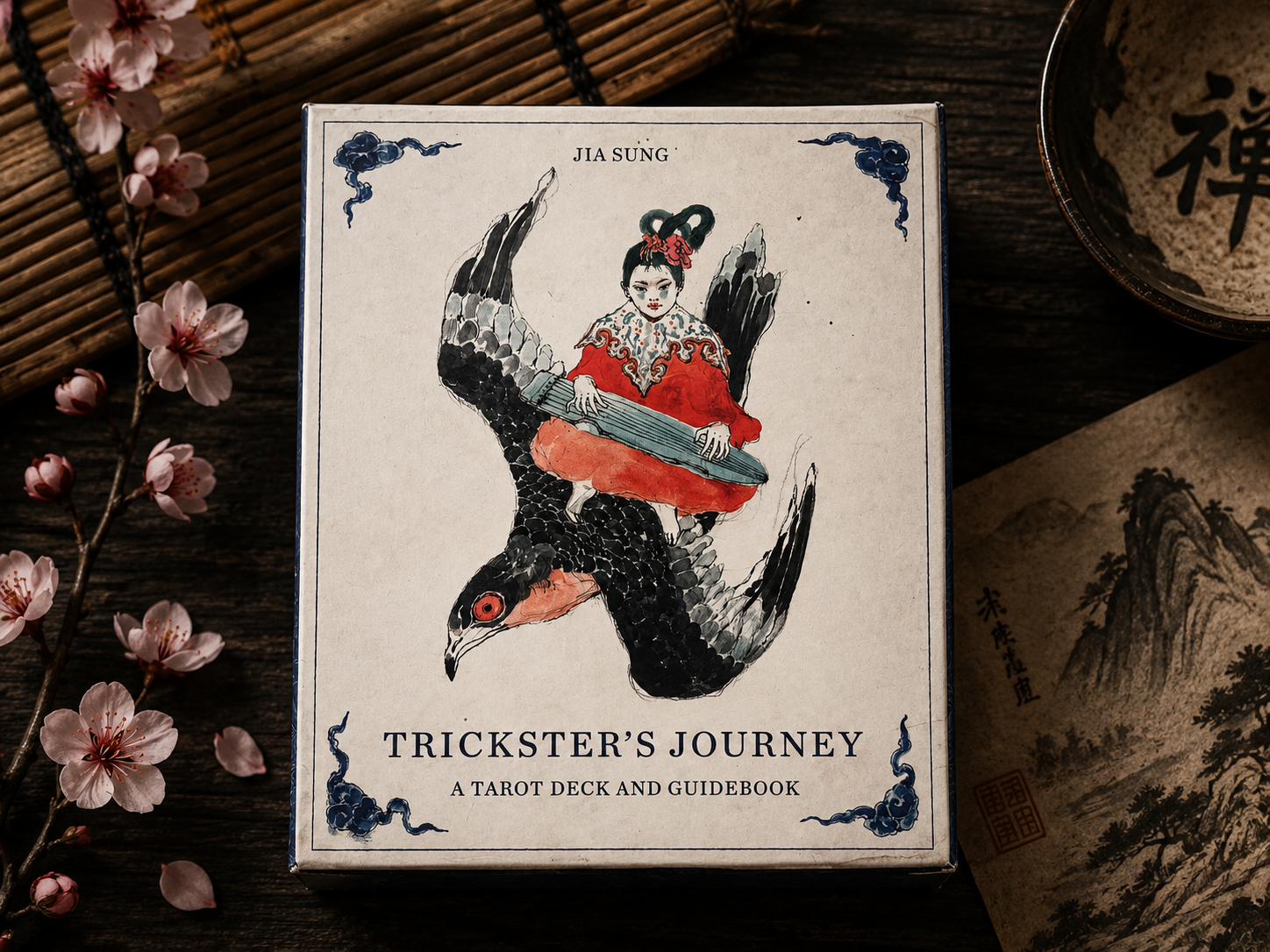
Trickster’s Journey Tarot
Trickster’s Journey is the deck I use for long-term game planning, strategic questions, and identifying the path of least resistance through a complicated situation.
Its imagery doesn’t approach life as a clean contest between correct and incorrect choices. The trickster survives by noticing openings, changing perspective, moving around rigid structures, and understanding when direct force is less effective than adaptation.
This makes the deck especially useful when the question isn’t simply, “What should I do?” but, “What sequence of choices creates the strongest long-term position?”
I don’t use a separate inverse meaning system with this deck. When a card appears reversed, both its upright and inverse meanings are considered together.
A reversed card may indicate tension between the card’s possibilities, a blocked expression of its energy, or a situation in which both interpretations are active at the same time. The reversal complicates the meaning rather than simply turning it into its opposite.
Long-term planning, career strategy, creative projects, difficult transitions, competing priorities, complicated relationships, and questions where the easiest route may also be the most intelligent one.
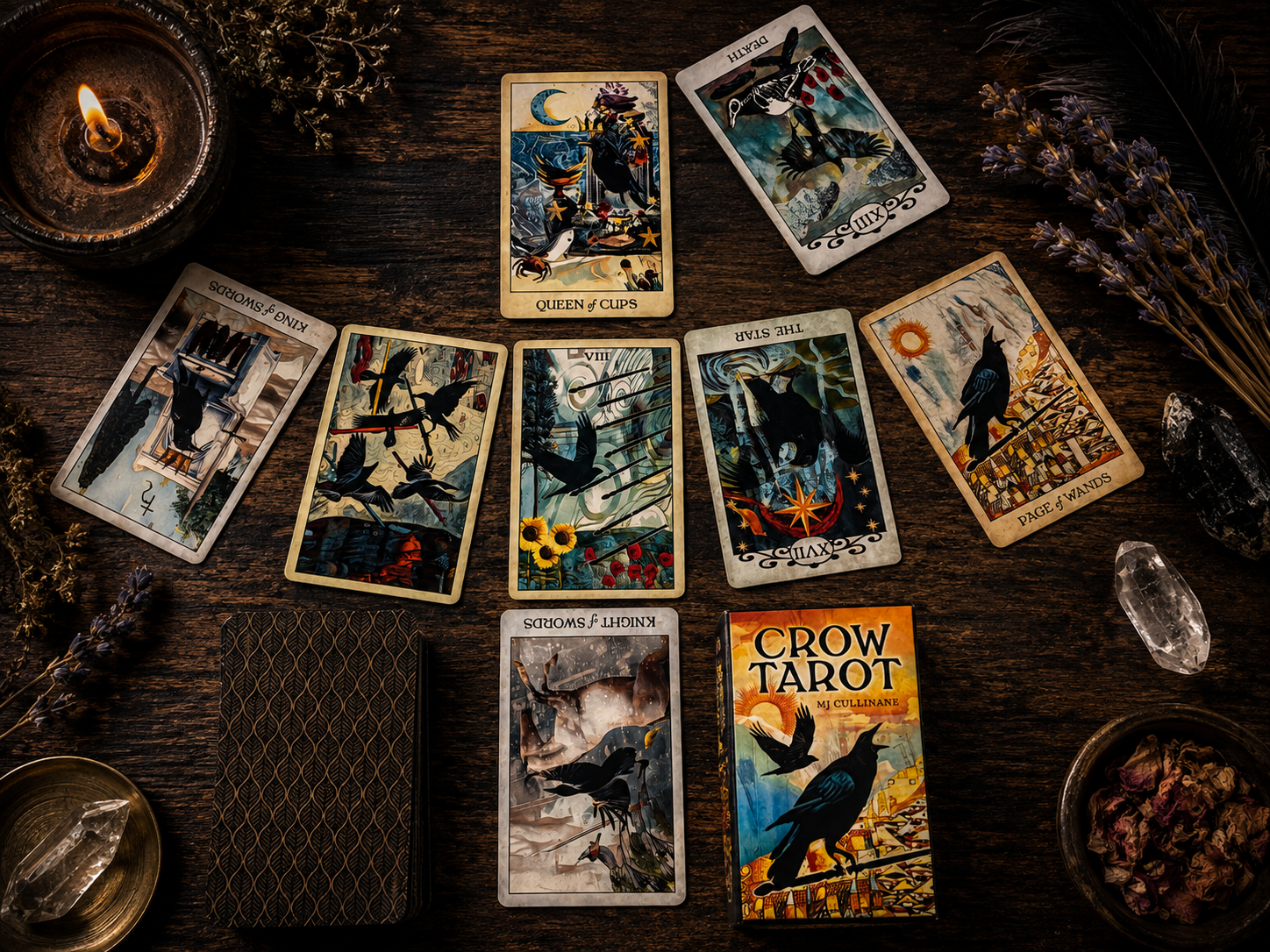
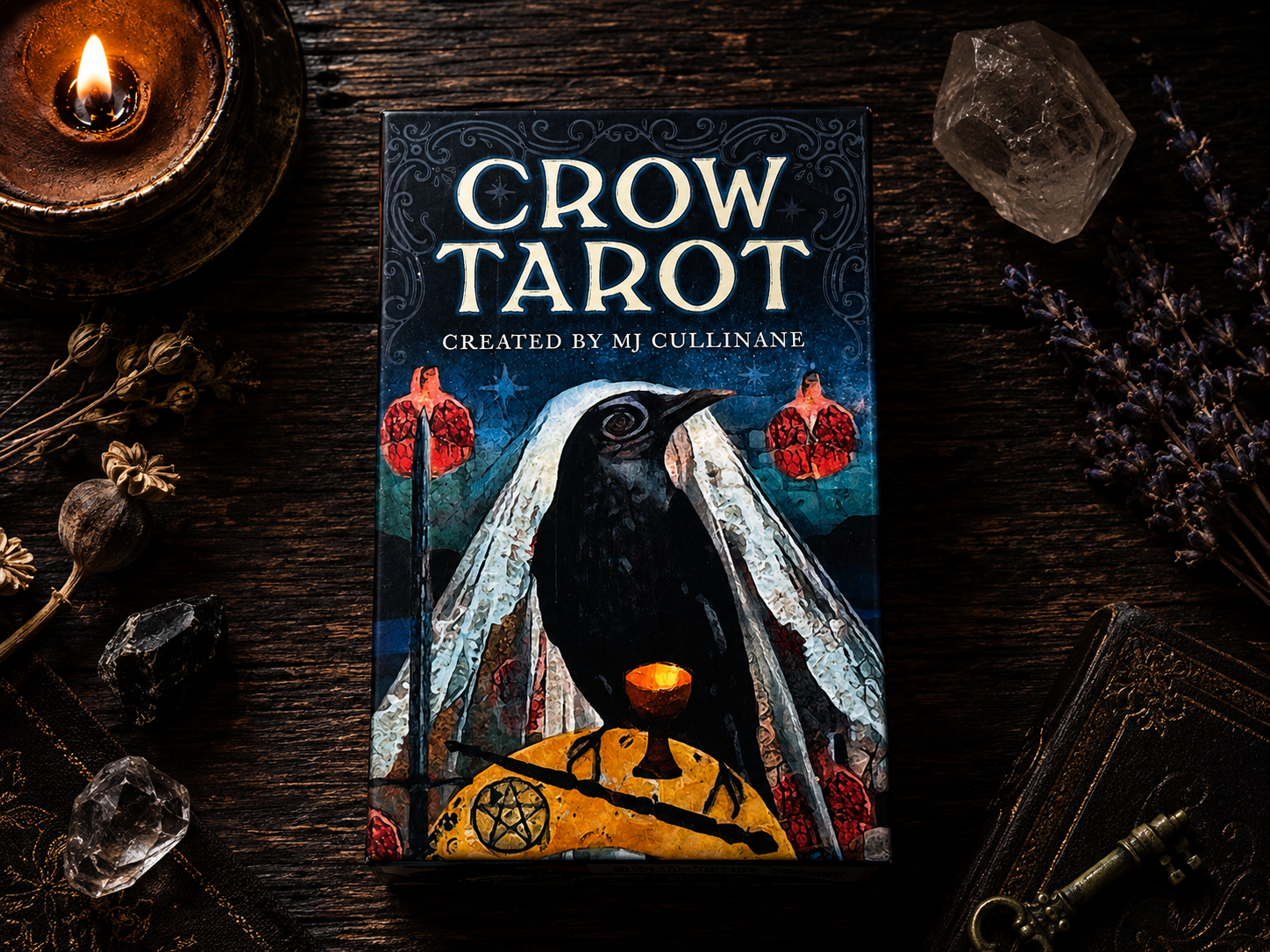
Crow Tarot
Crow Tarot is the deck I use to examine personal growth, spiritual development, shadow integration, and the movement between past lessons and current choices.
Crows are intelligent, social, observant, and capable of remembering both danger and generosity. Symbolically, they’re natural messengers between what has been learned, what’s being carried, and what still needs to be integrated.
This deck tends to reveal development as a process rather than a destination. It asks whether insight has actually changed behavior, whether an old lesson has been embodied, and whether the seeker is moving forward or merely repeating familiar language about growth.
This deck has a special eight-card spread built around the image of a crow carrying a message.
The eight positions track the origin of the message, what the seeker already knows, what remains hidden, what has been integrated, what continues to resist integration, the influence of the present environment, the next stage of growth, and the message being carried forward.
Spiritual growth, personal integration, recurring lessons, healing after major change, identity development, evaluating progress, and understanding where insight hasn’t yet become lived behavior.
The Black Tarot
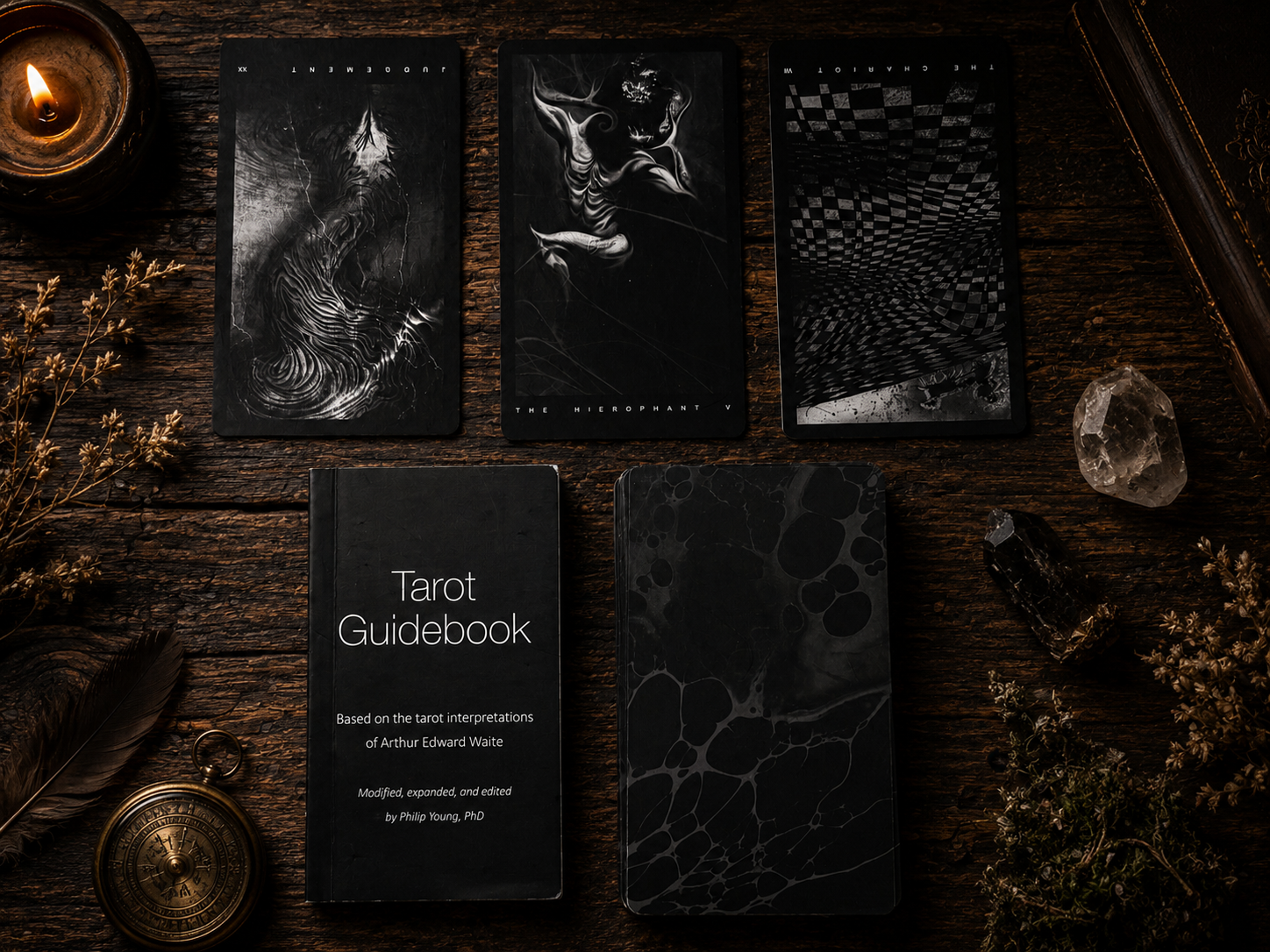
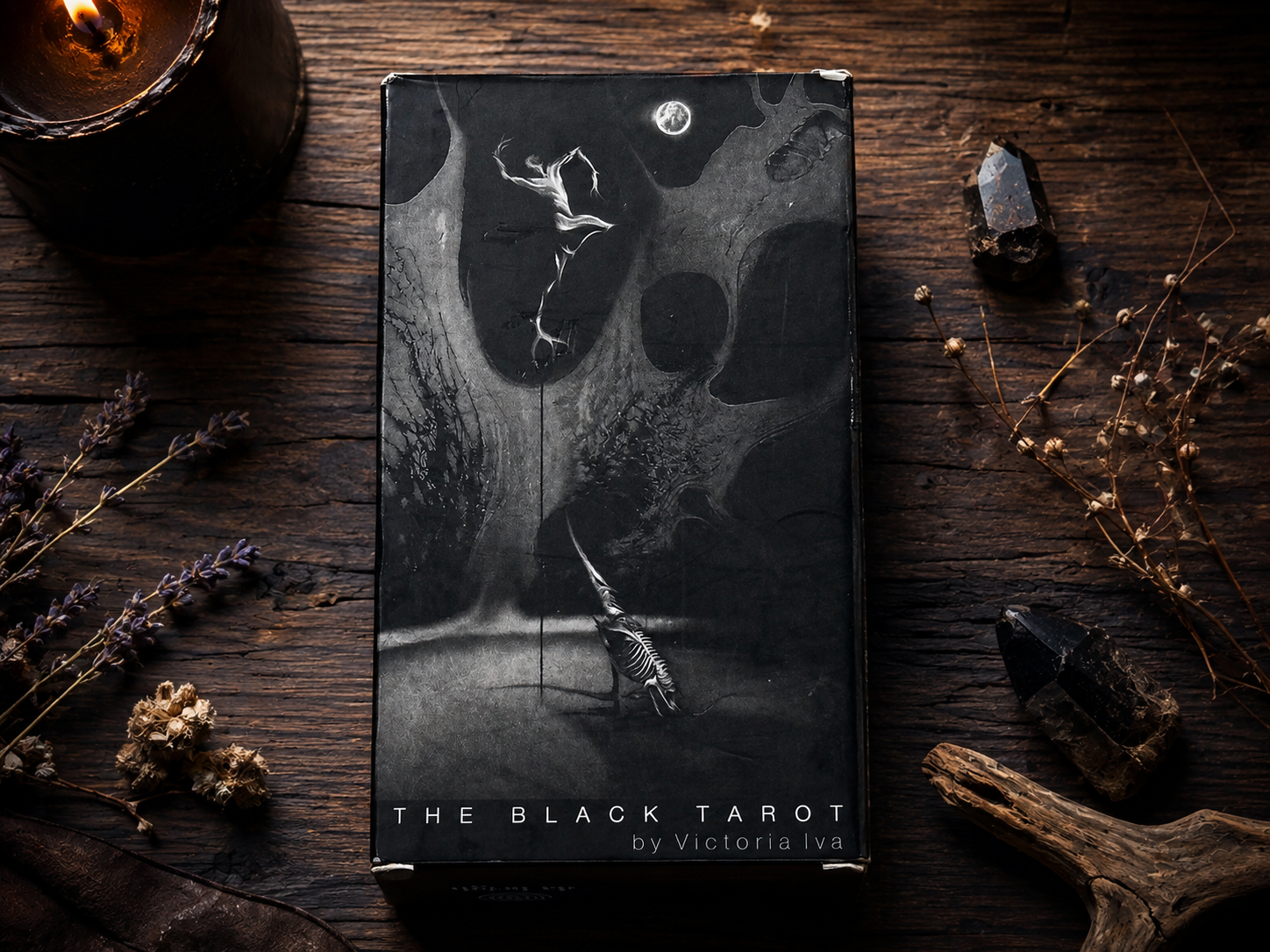
The Black Tarot, featuring gothic-inspired artwork by Victoria Iva, is the deck I use when the question is rooted in shadow work, avoidance, fear, repression, contradiction, or the parts of the self that resist being seen directly.
Its monochrome imagery strips away much of the comfort and familiarity people often bring to traditional tarot. The cards feel less interested in reassurance and more interested in the structures beneath the reassurance.
This deck often speaks from the position of the shadow itself. It doesn’t necessarily tell the questioner what they’re consciously trying to understand. It reveals what the question may be protecting, disguising, displacing, or refusing to confront.
I favor a three-card spread with this deck because its imagery is dense and psychologically charged. More cards don’t always produce more clarity. Sometimes they merely give the conscious mind more places to hide.
The three positions are interpreted as the visible issue, the shadow beneath it, and the point of integration. The spread stays narrow enough to preserve focus while still revealing the conflict between conscious narrative and unconscious pattern.
Shadow work, fear, avoidance, grief, emotional contradiction, self-sabotage, hidden motives, difficult truths, repeating patterns, and questions where reassurance would be less useful than honest recognition.
Sacred Symbols Oracle
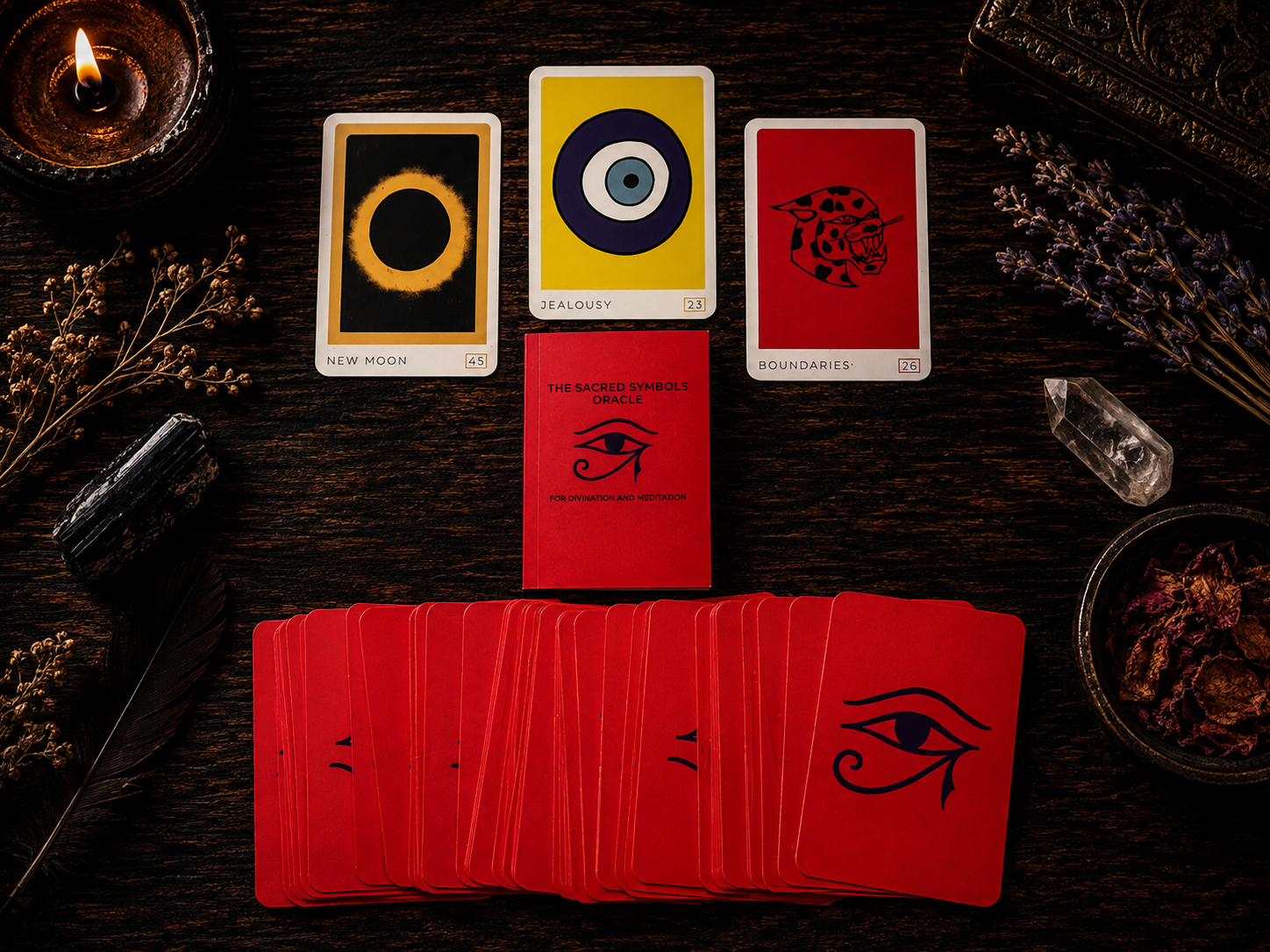
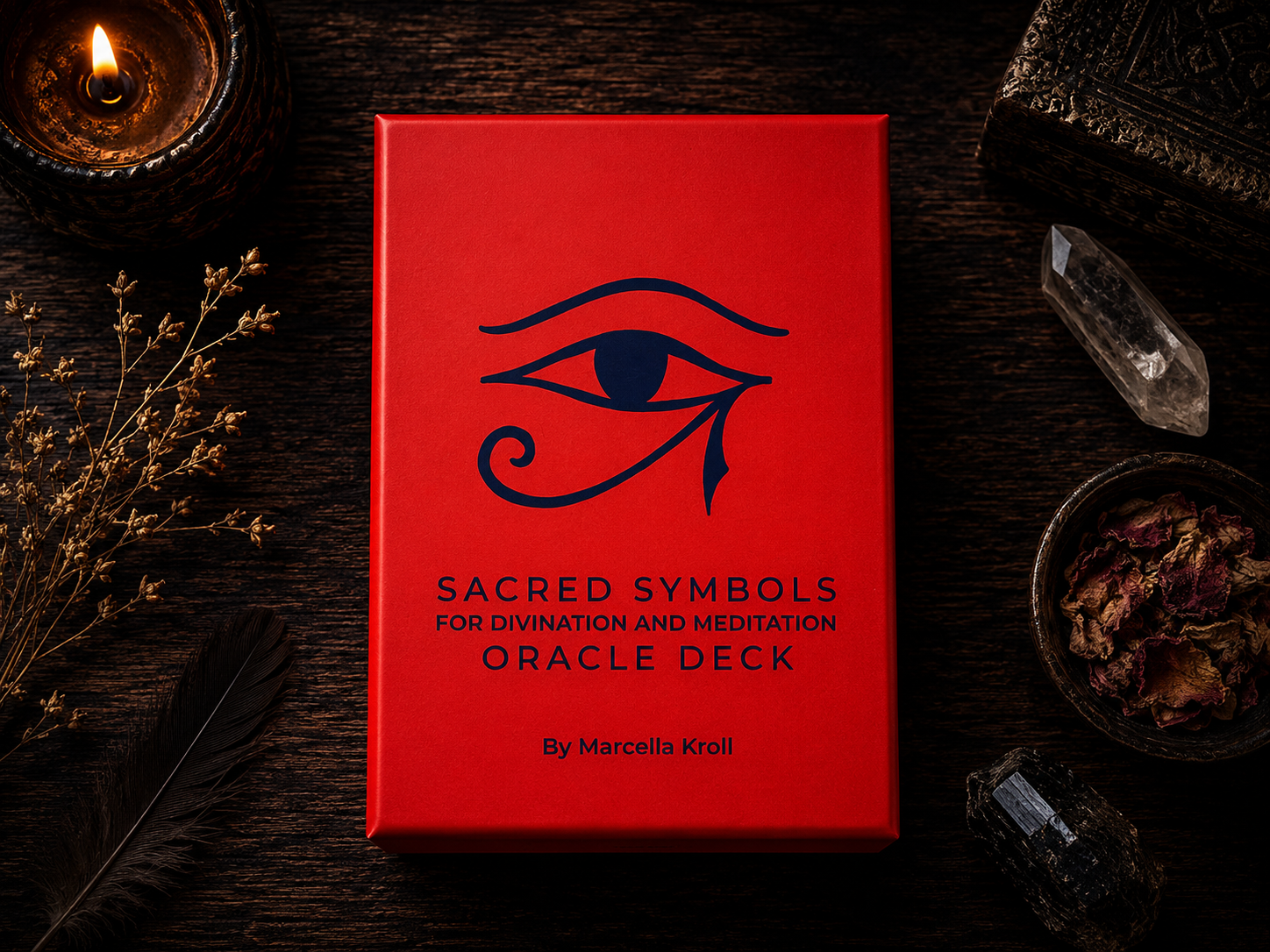
The Sacred Symbols Oracle is used when the question benefits from direct symbolic language rather than the layered narrative structure of tarot.
Its cards focus on specific images, states, boundaries, emotions, cycles, and symbolic concepts. That makes the deck useful for clarifying the central theme of a reading, identifying what requires attention, or providing a final message after a tarot spread.
The oracle deck can stand alone, but it also works well as a companion system. A tarot spread may reveal the larger psychological narrative, while an oracle card identifies the symbol or principle the questioner should carry forward.
Focused reflection, meditation, identifying the central theme of a situation, clarifying a tarot reading, setting an intention, or receiving a concise symbolic message without constructing a full narrative spread.
Tarot and Oracle
Both use imagery and symbolism, but they organize meaning in different ways.
Tarot
Tarot follows an established framework built from the Major Arcana, Minor Arcana, numbered cards, court cards, suits, elemental relationships, and recurring archetypal patterns.
That structure allows individual cards to interact as parts of a larger narrative. Position, sequence, suit, number, and surrounding cards all influence the reading.
Tarot is especially useful when a question needs depth, movement, conflict, chronology, or an examination of how several forces are interacting at once.
Oracle
Oracle decks aren’t bound to tarot’s seventy-eight-card structure. Each creator determines the deck’s number of cards, categories, imagery, meanings, and method of use.
Oracle readings are often more direct because each card can function as a focused concept, message, emotional state, or symbolic instruction without having to fit within tarot’s larger architecture.
Oracle is especially useful when the question needs a central theme, meditation point, clarifying symbol, or concise message rather than a full archetypal narrative.
Choosing a Deck
Clients may choose a deck when requesting a reading or leave the selection to me based on the question.
Trickster’s Journey
Best for long-term planning, finding openings, adapting to complex circumstances, and identifying the path of least resistance.
Crow Tarot
Best for tracking spiritual and personal growth, recurring lessons, identity development, and the movement from insight into lived change.
The Black Tarot
Best for hidden motives, fear, avoidance, difficult truths, self-sabotage, contradiction, and the parts of a question that resist conscious recognition.
Sacred Symbols Oracle
Best for concise symbolic messages, clarifying a larger reading, identifying the central theme, or creating a focused point for reflection and meditation.
Online Tarot Readings
Online readings allow you to submit a question, choose a deck, and receive an interpretation centered on the cards, their positions, and the pattern created across the spread.
Readings are offered as reflective guidance rather than guaranteed prediction. I’ll explain what the cards suggest, where tensions appear, how the images relate to one another, and what perspectives the spread introduces.
You remain responsible for deciding what applies, what doesn’t, and what action you choose to take after the reading. The cards may open the door. They don’t get to march through your life wearing your shoes.
Explain what you’d like the reading to examine. Open questions usually create more useful readings than questions limited to a simple yes or no.
Select Trickster’s Journey, Crow Tarot, The Black Tarot, or Sacred Symbols Oracle. You may also leave the choice to me.
I’ll interpret the spread as a connected symbolic pattern and explain how its individual cards contribute to the larger reading.
Request a Reading
Online tarot and oracle readings are available through Synchronic Self Theory. Use the contact page to ask about formats, scheduling, pricing, or which deck may best suit your question.