The short answer is no.
Not because I think every use of tarot is wise, harmless, or spiritually beneficial, but because the question itself is built on one of humanity's favorite bad habits. We love neat little categories. We like to sort the world into “good” and “evil,” “Christian” and “pagan,” “holy” and “sinful,” because categories are easy. Thinking is hard. Context is messy. Intention is inconvenient. It's much easier to slap a label on something and call the discussion finished than it is to ask what is actually taking place.
That tendency isn't unique to Christianity. We all do it. We decide that one object is inherently evil while another object performing an almost identical function somehow escapes judgment because we're familiar with it. We don't realize that we've stopped evaluating actions and started evaluating props.
Tarot cards have become one of those props.
Ask many Christians whether tarot is a sin and you'll receive an immediate answer without a second thought. Ask why, and the conversation often circles back to divination. Fair enough. Scripture certainly has strong things to say about divination. The problem is that people rarely stop to define what divination actually is before deciding they've identified it.
If I shuffle a deck of cards, lay out three images, and use them as prompts for self-reflection, have I committed divination?
If I use those same cards to claim I possess supernatural knowledge of the future or hidden information apart from God, then yes, I would argue we've entered an entirely different category.
Those aren't the same activity.
Yet modern discussions often treat them as if they are.
The irony is that we already accept symbolic reflection everywhere else.
Nobody panics when someone takes a personality test online. Nobody declares the Myers-Briggs to be witchcraft. Inkblot tests aren't usually followed by an emergency prayer meeting. A therapist asking you what you see in an abstract painting isn't accused of consulting familiar spirits. Somehow the moment seventy-eight illustrated cards enter the room, everyone suddenly acts as though Satan himself has started working the gift shop.
Human beings have an incredible ability to confuse the object with the action.
The Bible condemns many actions.
It says remarkably little about cardstock.
That distinction matters.
The biblical prohibition isn't against printed images. It's against practices intended to seek supernatural knowledge apart from God. The issue has always been where knowledge is believed to come from, not whether someone happened to be holding a deck of cards while thinking about their life.
Intent matters.
Purpose matters.
Context matters.
Reality stubbornly refuses to fit inside our neat little moral filing cabinet.
That's why I find the conversation so frustrating.
Instead of asking, “What exactly is being condemned?” many people simply ask, “What object was involved?” Once they've identified the object, they stop thinking altogether. It's theological shortcutting disguised as certainty.
That isn't careful biblical interpretation.
It's branding.
Even Christians unintentionally reveal this inconsistency.
Many people randomly open their Bible hoping God will direct them to the exact verse they need that day. Others read daily devotionals chosen for a specific date. Some receive encouraging verses through Bible apps with the tap of a button. None of these practices are automatically condemned because we understand that the object itself isn't exercising mystical power.
The object facilitates reflection.
The same principle can apply elsewhere.
The Accompanying Spread
What do the cards say about the question?
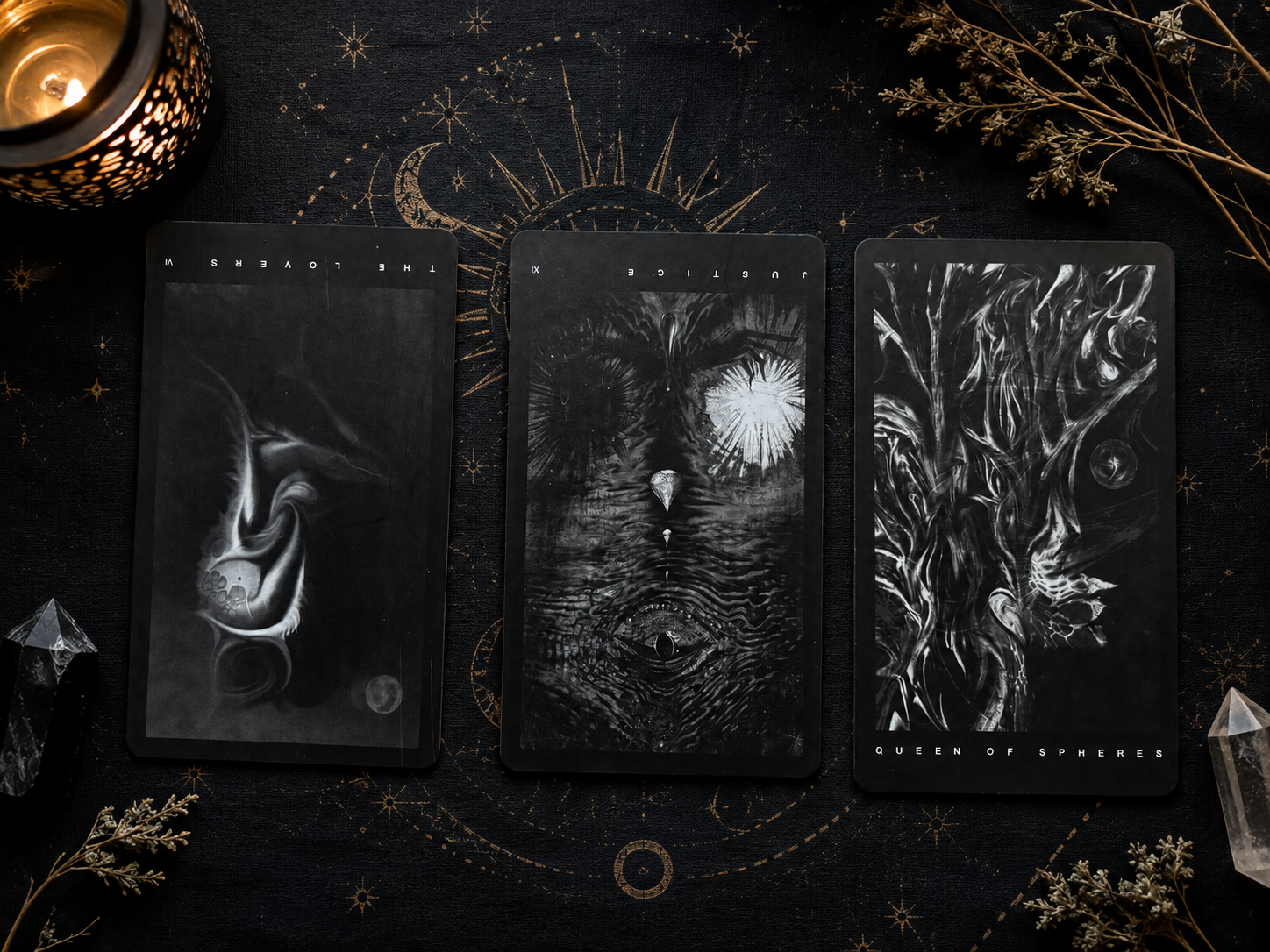
The tarot spread accompanying this article illustrates exactly that point.
The reversed Lovers asks whether we've divided the world into categories that are simpler than reality itself.
Justice reversed challenges whether we've judged fairly or whether we've allowed inherited assumptions to become unquestioned doctrine.
The Queen of Spheres brings the discussion back to earth, reminding us that wisdom ultimately has to function in the real world rather than inside abstract labels.
The cards aren't predicting the future.
They're prompting a conversation.
Ironically, that's exactly what good literature has done for thousands of years.
The larger issue is our obsession with categories.
We want everything to fit neatly inside a box.
Tarot is evil.
Chess is harmless.
Fortune cookies are funny.
Personality tests are science.
The Bible, however, consistently pushes us toward examining the heart behind an action rather than merely cataloging the object involved. That's a much harder way to live because it requires discernment instead of memorizing lists.
Discernment demands thought.
Lists demand obedience.
One is considerably more comfortable than the other.
None of this means every use of tarot is automatically wise. It certainly doesn't mean every spiritual claim made about tarot deserves to be believed. People can misuse almost anything. Religion, science, politics, psychology, even Scripture itself have all been twisted to justify terrible ideas. Misuse doesn't define the object. It defines the person using it.
Which brings us back to the original question.
Is tarot inherently a sin?
No.
Claiming supernatural authority through it is one thing.
Using symbolic artwork as a framework for reflection is another.
Treating those two activities as identical requires ignoring the very context that careful biblical interpretation is supposed to value.
So I'll leave you with one final question.